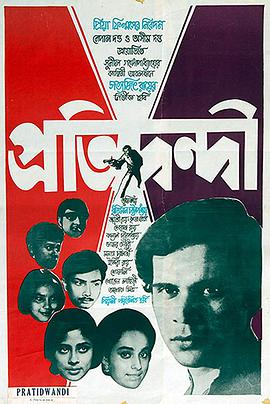
影片详情
正义者
Siddartha (Dhritiman Chatterjee) is forced to discontinue his medical studies due to unexpected and brutal death of his father. He has to now find a
- 类型
- 剧情片
- 年份
- 1970
- 地区
- 印度
- 语言
- 其它
- 导演
- 萨蒂亚吉特·雷伊
- 主演
- Dhritiman Chatterjee,Jayshree Roy,Debraj Roy
播放地址
《正义者》选集
剧情资料
剧情简介
《正义者》讲述的是什么故事?
《正义者》 Siddartha (Dhritiman Chatterjee) is forced to discontinue his medical studies due to unexpected and brutal death of his father. He has to now find a job in stead. In one job interview, he is asked to name the most significant world event in the last ten years. His reply is 'the plain human courage shown by the people of Vietnam', instead of the expected - man landing on moon. The interviewer asks is he is a communist. Needles to say that he does not get the job. He reaches a coffee shop where he is offered to work for the communist party. When he does not show any interest the party leader tells him about an opening for a medical representative. To escape from the heat and have a snooze, he goes in to a cinema. As a government propaganda newsreel is being shown before the feature, a bomb explodes in the cinema hall. In the stampede that follows, Siddartha, breaks his watch. He goes to a watchmaker but he cannot afford the repairs. Waiting to cross the road, he notices a sexy girl. He drifts back to his days as a medical student in a flashback. The professor is explaining anatomy of female breast. Many flashbacks and dreams occur to Siddartha through the film. On his way to hostel, he has an encounter with some hippies. Along with an ex-classmate, he goes out to see a porn film but to their disappointment, the film turns out to be not-so-pornographic. In such constant wandering in a Calcutta, disintegrated relationships with his sister and a Naxalite (militant communist) brother, his friendship with Keya is only thing that keeps him sane. Keya is a simple girl. They enjoy each other's company but they cannot make any commitment to each other due to the circumstances. After yet another attempt at a job interview, Siddartha leaves the big city to take a modest job of a salesman in a far off small town. He writes to Keya that he still cherishes their relationship. And that he has heard that bird call again but this time it is for real, and not his mind. After completing the letter, he comes out to the balcony of his modest room. The bird calls again. He also hears the sombre chants of a funeral procession. As he turns to the camera, the picture is frozen. This is the first film of the Calcutta Trilogy. The other two were and Seemabaddha (Company Limited, 1971) and Jana Aranya (The Middle Man, 1975). All the three films study the effect the big city of Calcutta has on the educated youth and the price it extracts from them. The seventies were a difficult period for India and West Bengal. The Corruption was rampant the Naxalite movement had created havoc in Calcutta. In fact, they had turned parts of Calcutta into 'liberated zones'. By the time the Naxalite movement died down, in 1975, Mrs. Indira Gandhi (then, Prime Minister of India) suppressed the fundamental rights and declared "Emergency" for her own political survival. Her son, Sanjay Gandhi became a dictator of sorts without any official designation. The opposition leaders were thrown into prisons. About his social responsibilities as a filmmaker, in an interview with Cineaste magazine, Ray commented, "You can see my attitude in The Adversary where you have two brothers. The younger brother is a Naxalite. There is no doubt that the elder brother admires the younger brother for his bravery and convictions. The film is not ambiguous about that. As a filmmaker, however, I was more interested in the elder brother because he is the vacillating character. As a psychological entity, as a human being with doubts, he is a more interesting character to me. The younger brother has already identified himself with a cause. That makes him part of a total attitude and makes him unimportant. The Naxalite movement takes over. He, as a person, becomes insignificant." In a letter to Seton in 1970, Ray wrote that Pratidwandi was the most provocative film he had made till then. The film is said to have evoked extreme reactions. "People either loved the film or hated it", Dhritiman Chatterjee told Andrew Robinson, Ray's biographer.
一、《正义者》是哪一年上映的?
《正义者》是萨蒂亚吉特·雷伊于1970年拍摄的一部经典剧情片。此片开创印度当代剧情片的先河,《正义者》上映时票房稳坐前三,创下当年纪录。当时Dhritiman Chatterjee,Jayshree Roy,Debraj Roy均为最佳主角,Dhritiman Chatterjee,Jayshree Roy,Debraj Roy以精彩演技和突出形象,奠定在印度影坛地位。Dhritiman Chatterjee,Jayshree Roy,Debraj Roy饰演角色造型多年后仍为人所模仿。萨蒂亚吉特·雷伊之前曾被人怀疑其能力,而《正义者》却奠定萨蒂亚吉特·雷伊剧情片风格。《正义者》首映时曾获海外剧情片和媒体广泛称誉,被认为其优秀程度,是足以与同时期(指1970年代)印度优秀剧情片齐名。
二、被称为剧情片的开先河之作的《正义者》,是萨蒂亚吉特·雷伊最好的作品吗?
从萨蒂亚吉特·雷伊斩获剧情片最佳导演开始,很多观众就觉得这部《正义者》是他极具代表性的剧情片。虽然萨蒂亚吉特·雷伊后来还拍出过评价很好的作品,但是《正义者》依然常被认为是他剧情片创作中的重要代表。
三、《正义者》为什么可以成为经典?
提起印度,不少观众都会想到《正义者》的名字。这部由萨蒂亚吉特·雷伊导演,Dhritiman Chatterjee,Jayshree Roy,Debraj Roy主演的《正义者》,在当时凭借鲜明的人物塑造和紧凑的剧情片叙事获得了不错反响。正是人物命运、情绪推进和故事节奏之间的相互配合,让《正义者》在同类型作品中具有较高辨识度,也让观众对其中的情节留下深刻印象。
四、如何评价《正义者》?
《正义者》口碑表现稳定,深受广大观众喜爱。不仅Dhritiman Chatterjee,Jayshree Roy,Debraj Roy的表演有看点,而且该剧情片故事情节紧凑,影院2(2.hnttlq.cn)观看起来流畅,同时还能保持较强的剧情吸引力。虽然不同观众对《正义者》的评价各有侧重,但该片目前的受欢迎程度已经名列同类作品前茅。
五、《正义者》剧情片的主要内容
《正义者》是一部剧情片作品,由导演萨蒂亚吉特·雷伊执导,Dhritiman Chatterjee,Jayshree Roy,Debraj Roy主演。影片围绕主要人物的经历展开,通过人物关系、情节推进和情绪变化,呈现出一段具有观看价值的剧情片故事。
《正义者》 Siddartha (Dhritiman Chatterjee) is forced to discontinue his medical studies due to unexpected and brutal death of his father. He has to now find a job in stead. In one job interview, he is asked to name the most significant world event in the last ten years. His reply is 'the plain human courage shown by the people of Vietnam', instead of the expected - man landing on moon. The interviewer asks is he is a communist. Needles to say that he does not get the job. He reaches a coffee shop where he is offered to work for the communist party. When he does not show any interest the party leader tells him about an opening for a medical representative. To escape from the heat and have a snooze, he goes in to a cinema. As a government propaganda newsreel is being shown before the feature, a bomb explodes in the cinema hall. In the stampede that follows, Siddartha, breaks his watch. He goes to a watchmaker but he cannot afford the repairs. Waiting to cross the road, he notices a sexy girl. He drifts back to his days as a medical student in a flashback. The professor is explaining anatomy of female breast. Many flashbacks and dreams occur to Siddartha through the film. On his way to hostel, he has an encounter with some hippies. Along with an ex-classmate, he goes out to see a porn film but to their disappointment, the film turns out to be not-so-pornographic. In such constant wandering in a Calcutta, disintegrated relationships with his sister and a Naxalite (militant communist) brother, his friendship with Keya is only thing that keeps him sane. Keya is a simple girl. They enjoy each other's company but they cannot make any commitment to each other due to the circumstances. After yet another attempt at a job interview, Siddartha leaves the big city to take a modest job of a salesman in a far off small town. He writes to Keya that he still cherishes their relationship. And that he has heard that bird call again but this time it is for real, and not his mind. After completing the letter, he comes out to the balcony of his modest room. The bird calls again. He also hears the sombre chants of a funeral procession. As he turns to the camera, the picture is frozen. This is the first film of the Calcutta Trilogy. The other two were and Seemabaddha (Company Limited, 1971) and Jana Aranya (The Middle Man, 1975). All the three films study the effect the big city of Calcutta has on the educated youth and the price it extracts from them. The seventies were a difficult period for India and West Bengal. The Corruption was rampant the Naxalite movement had created havoc in Calcutta. In fact, they had turned parts of Calcutta into 'liberated zones'. By the time the Naxalite movement died down, in 1975, Mrs. Indira Gandhi (then, Prime Minister of India) suppressed the fundamental rights and declared "Emergency" for her own political survival. Her son, Sanjay Gandhi became a dictator of sorts without any official designation. The opposition leaders were thrown into prisons. About his social responsibilities as a filmmaker, in an interview with Cineaste magazine, Ray commented, "You can see my attitude in The Adversary where you have two brothers. The younger brother is a Naxalite. There is no doubt that the elder brother admires the younger brother for his bravery and convictions. The film is not ambiguous about that. As a filmmaker, however, I was more interested in the elder brother because he is the vacillating character. As a psychological entity, as a human being with doubts, he is a more interesting character to me. The younger brother has already identified himself with a cause. That makes him part of a total attitude and makes him unimportant. The Naxalite movement takes over. He, as a person, becomes insignificant." In a letter to Seton in 1970, Ray wrote that Pratidwandi was the most provocative film he had made till then. The film is said to have evoked extreme reactions. "People either loved the film or hated it", Dhritiman Chatterjee told Andrew Robinson, Ray's biographer.